
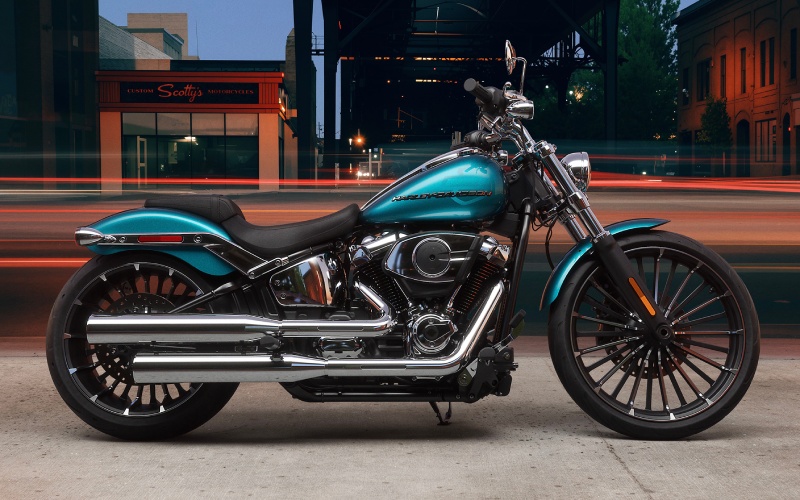
Electric City Harley-Davidson® - Which cruiser feels stronger rolling onto I-81 near Wilkes-Barre, PA — the 2026 Harley-Davidson® Breakout® or the 2026 Indian Chief Bobber Dark Horse?
Riders often ask a simple question with big implications: which muscle cruiser feels stronger when you roll on from 35 to 65 mph — the 2026 Harley-Davidson® Breakout® or the 2026 Indian Chief Bobber Dark Horse? It is a fair ask for anyone who merges onto I-81 or threads through Riverside streets before opening the throttle toward open two-lanes. Both machines serve up big-inch V-Twin torque, but how they deliver that torque — and how the chassis supports it — shapes the sensation from the saddle. This guide breaks down where that “roll-on” strength comes from and how to evaluate it in a way that reflects daily riding.
What shapes real-world roll-on strength
Three factors dominate midrange muscle: usable torque at the rpm you actually ride, gear ratios that keep the engine in its sweet spot, and rear tire footprint that can translate thrust into forward motion. The 2026 Harley-Davidson® Breakout® leans on a Milwaukee-Eight® 117 Custom with a broad plateau of torque and gearing spaced for decisive passes. The Chief Bobber Dark Horse counters with the air-cooled Thunderstroke 116 and a relaxed primary feel that emphasizes traditional V-Twin character.
When riders talk about “it just pulls,” they are describing how an engine and drivetrain hold torque as speed rises. The Breakout®’s 117 cu in mill, with its 10.3:1 compression and electronic fuel injection calibration, is tuned to hit hard early and stay strong through the middle. Indian’s Thunderstroke 116 brings a deep, even surge, but its delivery is filtered through a different primary and a narrower rear tire, which can subtly change how much of that torque you feel as planted thrust on patchy pavement.
Chassis, contact patch, and confidence
Roll-on is not just about the engine; it is about translating the engine’s output into usable drive. The Harley-Davidson® Breakout® combines a 21-inch front wheel and a 240mm rear tire to stabilize the bike under load. That wide, flatter contact patch typically means fewer traction-management interventions and more consistent driving, especially as the surface changes under overpasses or on painted lines. The Chief Bobber Dark Horse’s 180mm rear tire can feel lively and light — part of its appeal — but the smaller patch and shorter wheelbase will feel different as speeds climb and you add throttle over less-than-perfect surfaces.
Electronics play a quiet role. The Breakout®’s Cornering Rider Safety Enhancements (C-ABS, C-TCS, and C-DSCS) help preserve smoothness as you add throttle at lean or hit an unexpected ripple. While the Indian offers ABS and multiple ride modes, it does not list cornering-optimized ABS or traction control; that difference can show up as steadier, more predictable drive in mixed conditions on the Harley-Davidson® layout.
How to think about gearing and midrange
The reason gearing matters is simple: you want the engine to sit right where torque is fattest during everyday acceleration. The Breakout®’s first-to-sixth ratios are spaced to deliver a punchy transition from city speeds to highway pace without a flurry of downshifts. The Chief Bobber Dark Horse’s six-speed is also highway-friendly, but the combination of its primary feel and final drive contributes to a more relaxed tug. For many riders, that relaxed feel is likable; for those who want the sensation of hard, linear roll-on, the Breakout®’s calibration tends to feel more assertive.
Fit, posture, and what you feel through the bars
Body position changes the story. The Breakout®’s long-and-low posture, 34 degrees of rake, and 66.7-inch wheelbase load the rear contact patch under acceleration, which can translate to calmer steering feedback as you add throttle. The Chief Bobber Dark Horse’s mini-ape bars and shorter chassis add attitude and nimbleness, but some riders read more weight transfer and movement through the bars in roll-on scenarios. Neither approach is wrong; they are simply distinct experiences.
Choosing ride modes that actually help
Both bikes feature multiple ride modes. Use them. On the Harley-Davidson® Breakout®, the customizable modes refine throttle response to match conditions; dialing back response in the wet or choosing a sharper map for dry roll-on can keep the bike right where you want it. On the Indian, Tour, Standard, and Sport clearly change throttle character; experiment with each on the same stretch of road to feel how the midrange transitions in your hands.
Frequently Asked Questions:
Does a wider rear tire really help with roll-on?
It can. A 240mm tire like the Breakout® uses can create a broader contact patch, which helps put torque to the ground predictably over mixed surfaces. It also supports stability as you increase throttle at speed, contributing to that planted, “hooked up” sensation.
Is a connected display more important than cornering aids?
It depends on priorities. Many riders love the Chief Bobber Dark Horse’s 4-inch Display with built-in navigation. If you value added safety margins in varied traffic and road surfaces, the Breakout®’s Cornering Rider Safety Enhancements may feel more meaningful day to day.
Which one feels stronger in the 35 to 65 mph range?
Both pull well, but the Harley-Davidson® Breakout® typically delivers a more assertive midrange surge, thanks to its Milwaukee-Eight® 117 Custom tuning, gearing, and the way its chassis keeps the rear tire loaded under acceleration.
How should I compare them on my usual routes?
Use consistent stretches of road, try equivalent ride modes, and focus on how steady the steering feels as you add throttle, how quickly you reach highway pace, and whether electronics step in. That frame of reference reveals differences that spec sheets alone cannot show.
Key takeaways for Wilkes-Barre-area riders
If your commute mixes neighborhood streets with quick highway merges, and you want a strong, planted surge from midrange rpm, the Harley-Davidson® Breakout® stands out for its broad torque delivery and stability under load. If classic bobber feel, a compact stance, and a built-in navigation display top your list, the Chief Bobber Dark Horse has clear appeal.
Whichever direction you lean, Electric City Harley-Davidson® is here with local insight and product knowledge, serving Binghamton, NY, Wilkes-Barre, PA, and Williamsport, PA. The right choice comes down to how you prioritize torque feel, stability, and the kind of tech that best supports your rides.