
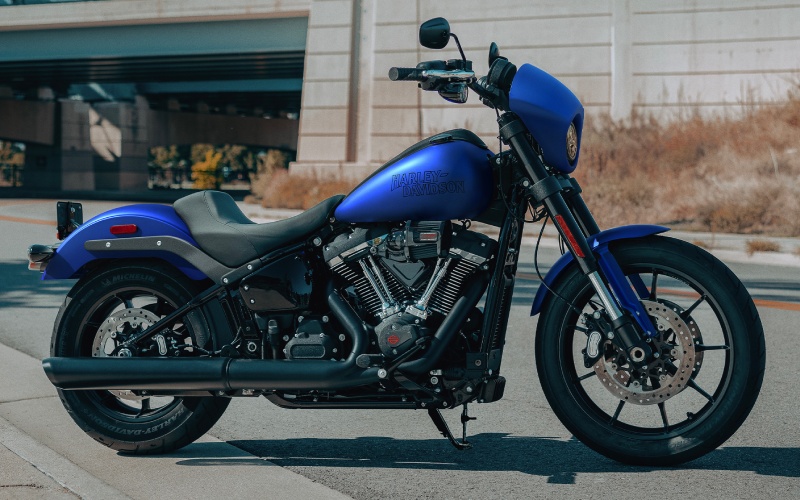
Electric City Harley-Davidson® - Which muscle cruiser handles Wilkes-Barre, PA commutes and backroads better — the 2026 Harley-Davidson® Low Rider® S or the 2026 Ducati Diavel V4?
Riders comparing the 2026 Harley-Davidson® Low Rider® S and the 2026 Ducati Diavel V4 often ask a deceptively simple question: which bike feels easier to control, day in and day out, on Wilkes-Barre, PA streets and nearby winding roads? It’s a fair question, because both pack serious performance but deliver it very differently. One uses a brawny Milwaukee-Eight® 117 High Output V-Twin with 114 HP and 128 ft-lbs of torque; the other wields a Granturismo V4 with 168 HP and 93 lb-ft. Those numbers set expectations, yet real-world riding is about more than peak figures. It’s about how the bike responds at 20 to 60 mph, how it absorbs imperfect pavement, and how settled it feels when you turn in across patched seams or throttle out of a bumpy corner.
On that front, the Low Rider® S leans into usable torque and planted manners. Peak torque arrives early, so the bike lunges forward with minimal effort—perfect for short passing zones on Route 309 or rolling accelerations onto I-81. The chassis delivers 31.3 degrees of lean with a sharpened suspension and taller rear shocks, creating stable corner entries and predictable mid-corner feedback. A low 27-inch laden seat helps you get both feet down on cambered side streets, and the analog-plus-digital gauge is legible at a glance. Ducati’s Diavel V4 counters with exquisite top-end power, fully adjustable suspension, premium Brembo Stylema brakes, and a 5-inch TFT packed with connectivity. It’s thrilling at pace, especially if you favor higher rpm. But when the route gets mixed—stoplights, rough surfaces, then fast sweepers—the Harley-Davidson® often feels calmer, more connected, and less demanding.
The heart of the matter: low-speed control and midrange drive
Low-speed composure and midrange thrust define everyday rideability. The Low Rider® S, with its Milwaukee-Eight® 117 High Output, thrives here. It delivers torque right where riders spend most of their time, so you short-shift, stay relaxed, and still access brisk acceleration. The Diavel’s V4 is exhilarating when spun up; however, its personality really shines as revs climb. That can be intoxicating on open stretches but asks a bit more attention in dense traffic or on broken pavement. Around Wilkes-Barre, PA, where surface quality can change block-to-block, the Harley-Davidson®’s tractable response and Cornering Rider Safety Enhancements—C-ABS, C-TCS, and C-DSCS, along with TPMS—provide a reassuring buffer.
- Engine character: The Low Rider® S emphasizes immediate, low-to-mid rpm torque; the Diavel V4 trades some of that early grunt for stronger top-end horsepower.
- Chassis feel: Harley-Davidson® geometry and suspension updates favor stability and clear feedback over rough surfaces; the Ducati feels sharper and more reactive at higher speeds.
- Confidence at stops: A 27-inch laden seat on the Low Rider® S improves footing on angled or uneven surfaces; the Diavel’s 31.1-inch seat adds reach for many riders.
Neither approach is wrong. But for many riders who split time between downtown commutes and short getaway loops, the Harley-Davidson® formula simply feels more intuitive.
Brakes, electronics, and the “calm cockpit” factor
Both bikes bring sophisticated safety features. The Low Rider® S integrates Cornering Rider Safety Enhancements and TPMS, covering traction, braking, and deceleration forces upright or leaned. Ducati offers Cornering ABS, Ducati Traction Control, Ducati Wheelie Control, Riding/Power Modes, cruise control, and Ducati Brake Light. In daily use, one difference riders notice is cockpit clarity. The Low Rider® S pairs a classic 4-inch analog speedometer with a digital info window—gear, fuel, ride modes, traction control, ABS, TPMS, and more—minimizing visual clutter. The Diavel’s 5-inch TFT is rich with information and connectivity, a big plus if you value multimedia features. But if you prefer the simplicity of an analog needle and concise data at a glance, particularly on choppy asphalt or when scanning traffic, Harley-Davidson® keeps your eyes settled.
Handling broken pavement, painted lines, and quick transitions
Across Wilkes-Barre’s mix of brick patches, tar snakes, and fresh asphalt, the way a motorcycle steers and communicates matters. The Low Rider® S’s suspension tuning and tire choices help the chassis stay calm through bumps mid-corner—important when an unexpected surface change appears near the apex. Ducati’s Diavel V4 is equally capable, but the wide rear tire and sharper demeanor shine brightest once you’re fully committed and flowing at speed. If you’re often transitioning from surface to surface while threading gaps in traffic, the Harley-Davidson® setup rewards measured inputs and returns steady feedback.
Which riders gravitate toward each bike?
- Torque-first riders: Prefer the Harley-Davidson® Low Rider® S for its early torque, predictable chassis, and low-seat reassurance in stop-and-go scenarios.
- High-rpm enthusiasts: Lean toward the Diavel V4 for its rev-happy engine, adjustable suspension, and premium braking hardware when riding briskly.
- Interface preference: Choose the Harley-Davidson® if a calm, analog-led cockpit appeals; choose the Ducati if you want a rich TFT with multimedia features.
Most riders fit somewhere in between. The key is aligning engine character, ergonomics, and chassis feedback to your typical Wilkes-Barre, PA route—not just the weekend blast, but the miles you ride most days.
Frequently Asked Questions:
Which bike is more comfortable in everyday stop-and-go traffic?
The 2026 Harley-Davidson® Low Rider® S typically feels easier thanks to its low 27-inch laden seat and tractable torque delivery. You can place a foot more confidently at uneven stops and use early torque to glide away smoothly. The Diavel V4 is comfortable, but its taller seat and higher-revving character ask for a little more attention at very low speeds.
How do the safety systems compare when roads are slick or uneven?
Both are advanced. The Low Rider® S layers Cornering Rider Safety Enhancements—C-ABS, C-TCS, and C-DSCS—with TPMS to help manage traction and deceleration forces even while leaned. Ducati provides Cornering ABS, Ducati Traction Control, Ducati Wheelie Control, and Ducati Brake Light. In mixed conditions, many riders appreciate the Harley-Davidson® blend of cornering aids and clear, minimalistic cockpit feedback.
What about long weekend rides—any edge there?
Either can do the distance. The Low Rider® S aims for composure and clarity over evolving surfaces, which many riders find less tiring. The Diavel V4’s strong top-end and premium brakes make it compelling on fast, open roads. Consider your pace and typical surfaces when choosing.
Is one better for riders returning to motorcycling after a break?
If you value a low seat, strong midrange power, and a cockpit that’s easy to read at a glance, the 2026 Harley-Davidson® Low Rider® S stands out. Skilled riders will love the Diavel V4 too, especially if they plan to ride at a spirited clip; just know it rewards higher revs.
Ultimately, it’s about matching a motorcycle to the way you ride most of the time. Electric City Harley-Davidson® is serving Binghamton, NY, Wilkes-Barre, and Williamsport, PA, with grounded, model-specific insights to help you make that call with confidence. With the Milwaukee-Eight® 117 High Output, selectable ride modes, Cornering Rider Safety Enhancements, and a rider interface that keeps you centered, the 2026 Harley-Davidson® Low Rider® S makes a compelling case for control-first performance in Wilkes-Barre, PA, and beyond.