
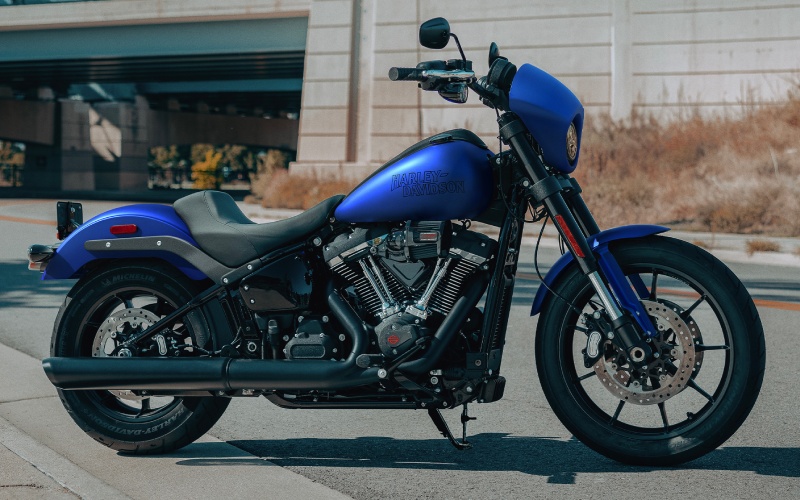
Electric City Harley-Davidson® - Which offers more real-world control for Williamsport, PA riders — the 2026 Harley-Davidson® Low Rider® S or the 2026 Indian Sport Chief?
Riders talk a lot about power, but “control” is what shapes your confidence in the moment that matters—like when a mid-corner bump tries to stand the bike up or when an unexpected patch of gravel appears at the apex. If you are weighing the 2026 Harley-Davidson® Low Rider® S against the 2026 Indian Sport Chief, here is a deep dive into how each platform supports your inputs on the varied roads around Williamsport, PA.
Both bikes are built to run hard. The Harley-Davidson® brings the Milwaukee-Eight® 117 High Output with a performance-tuned 2-into-1 exhaust and a Heavy Breather intake. The Indian counters with the air-cooled Thunderstroke 116’s broad torque and a cockpit anchored by a 4-inch Ride Command display with GPS navigation. On paper, these are two flavors of American muscle; on pavement, the differences are clearest when the road tightens and the surface gets less than ideal.
What riders really mean by “control”
Control is the predictable relationship between your inputs and the bike’s responses—especially under braking, and while leaned over. It is how the chassis, electronics, and tires work together when the road does not cooperate. Around the rolling terrain and patchwork surfaces common in central Pennsylvania, that predictability is often the difference between a good ride and a great one.
Powertrains and feel through the midrange
The Low Rider® S’s Milwaukee-Eight® 117 High Output is tuned for crisp response and stout midrange. It pulls hardest where riders actually spend time—rolling on from 3,000 to 5,000 rpm—and backs that up with a 2-into-1 exhaust that helps drive cleanly off the corner. The Sport Chief’s Thunderstroke 116 emphasizes lower-rpm torque, making the bike feel relaxed and authoritative down low. If you prefer a motor that begs to be worked through the midrange, the Harley-Davidson® tune is going to feel more eager; if you like loafing torque with fewer shifts, the Indian has a friendly, brawny cadence.
Lean-sensitive rider aids vs. upright-only ABS
This is where the gap becomes obvious. The Low Rider® S packages Cornering Enhanced ABS (C-ABS), Cornering Enhanced Traction Control (C-TCS), and Cornering Drag-Torque Slip Control (C-DSCS), as well as TPMS, all standard. That lean-aware logic refines how braking and traction interventions occur as the bike tips in, helping keep the tire’s grip envelope intact when you need it most. The Sport Chief offers Bosch ABS and selectable ride modes that work well when upright, but it does not layer on the same cornering-specific calibrations. In a place like Williamsport—where expansion joints, tar snakes, and weather can all show up in one corner—those cornering aids can be the difference between a calm correction and an abrupt surprise.
Suspension, brakes, and the “set it and forget it” factor
Both bikes bring upgraded suspension and stout brakes. Up front, you will find 43 mm inverted forks on each. Out back, the Indian uses longer Fox® piggyback shocks with multi-click adjustability, while the Harley-Davidson® uses a taller hidden monoshock with hydraulic preload. The Indian’s adjustability is a genuine benefit if you like fine-tuning with tools. The Harley-Davidson® calibration, combined with its taller rear ride height, gives the bike quick turn-in and generous lean angle without constant tinkering. Braking is strong on both—Brembo® hardware on the Indian, 4-piston front calipers on the Harley-Davidson®—but the Harley-Davidson® gains a composure edge from C-ABS when the front tire is loaded at lean.
Interface and information
If you want built-in navigation, the Sport Chief’s 4-inch Ride Command display makes it easy to follow a route. The Low Rider® S keeps the cockpit focused with a 4-inch analog speedometer and integrated digital readouts for gear, fuel, ride modes, ABS/TCS status, TPMS, and more. For riders who prefer a minimalist eye line and fewer distractions in the twisties, that is a plus; for riders who rely on on-screen nav prompts, the Indian’s system is compelling.
Who will prefer which bike?
If you want a cruiser that combines big-twin muscle with cornering-aware electronics and a chassis tuned to change direction with poise, the Harley-Davidson® entry is the more confidence-inspiring option. If your top priority is integrated navigation and low-rpm torque, the Indian’s strengths line up with that wish list. Both are character-rich, but they emphasize different kinds of control—one electronic and chassis-driven, the other infotainment-forward with classic torque.
- Cornering assistance: The Low Rider® S layers C-ABS, C-TCS, C-DSCS, and TPMS for more predictable behavior when leaned over.
- Cockpit technology: The Sport Chief’s 4-inch Ride Command display with GPS navigation and Bluetooth is a standout for riders who want directions in the fairing.
- Everyday usability: Both sit at about a 27-inch seat height and bring inverted forks, dual discs, and ride modes for day-to-day comfort and control.
Frequently Asked Questions:
Which bike offers more confidence on imperfect roads?
The Harley-Davidson® Low Rider® S, thanks to standard Cornering Rider Safety Enhancements and TPMS, provides a more consistent feel when braking or managing traction while leaned over on patchy or wet pavement.
Does the Indian Sport Chief have built-in navigation?
Yes. Its 4-inch Ride Command display includes GPS navigation and Bluetooth connectivity, with available enhancements via Ride Command+ for added convenience.
How do the suspensions differ in setup?
The Sport Chief uses longer Fox® piggyback rear shocks with multiple adjustments for riders who want to dial in settings. The Low Rider® S uses a taller hidden monoshock with hydraulic preload and a calibration that favors quick turn-in and increased lean angle with minimal fuss.
For riders weighing this choice, Electric City Harley-Davidson® is serving Wilkes-Barre, Williamsport, and Mountain Top with insights grounded in real local roads. The best answer to which bike delivers more control often comes down to how you define “confidence.” If it is cornering stability and traction management when the surface gets complicated, the Low Rider® S is hard to beat. If it is about on-screen guidance and low-rpm torque with a familiar cruiser rhythm, the Sport Chief has its appeal.
Ultimately, both models have strong identities. Around Williamsport, PA—where a Sunday loop can combine river curves, town traffic, and ridge climbs—the Harley-Davidson® package of cornering electronics, responsive midrange, and increased lean clearance delivers a calm, connected ride you can trust from the first mile to the last.