
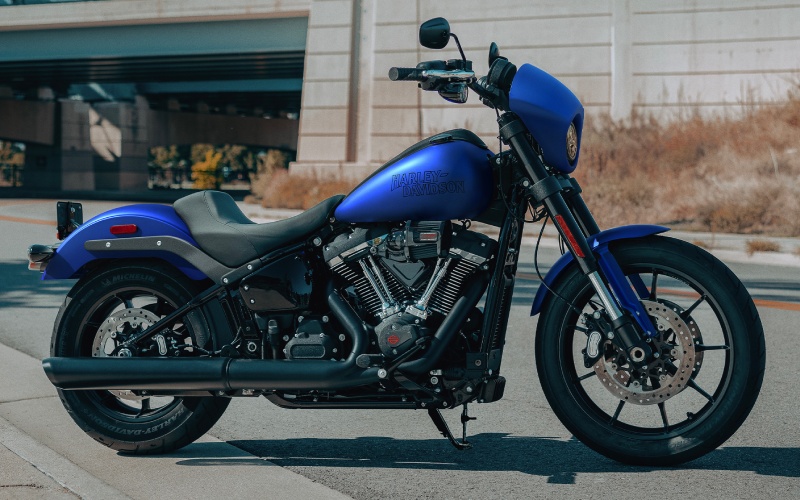
Electric City Harley-Davidson® - Cornering Confidence for Williamsport, PA, Riders — The 2026 Harley-Davidson® Low Rider® S Emphasis on Control
When a motorcycle is engineered to corner as well as it accelerates, everything about the ride feels more deliberate — and more fun. The 2026 Harley-Davidson® Low Rider® S is built around that idea, pairing the Milwaukee-Eight® 117 High Output engine with a performance-tuned chassis and smart, corner-aware electronics. That combination helps riders in and around Williamsport, PA, thread tight turns, settle into fast sweepers, and handle quick transitions with poise. It is not just about raw numbers; it is about how the motorcycle talks back through the bars, the seat, and the pegs as you lean in.
A huge piece of the puzzle is confidence at the limits. With standard Rider Safety Enhancements — including Cornering Enhanced Anti-lock Brake System (C-ABS), Cornering Enhanced Traction Control System (C-TCS), and Cornering Drag-Torque Slip Control System (C-DSCS) — the Low Rider® S manages traction and brake pressure based on lean angle. Braking hard while bent in does not have to be a roll of the dice. Throttle back in the lean does not need to feel like a gamble. The chassis helps, too: a 43 mm inverted fork with aluminum triple clamps, a hydraulic-preload monoshock with 56 mm of stroke, and Michelin® Scorcher 31 tires create a connected, planted feel through imperfect Pennsylvania pavement.
To understand how these systems translate to day-to-day riding, it helps to break down what the motorcycle is doing in the background. When you squeeze the front brake mid-corner, C-ABS estimates the grip available at your current lean angle and modulates pressure to help control slip. If you accelerate while leaned over, C-TCS monitors rear-wheel spin and meters power delivery to keep the tire hooked. And if you downshift aggressively into a corner, C-DSCS tempers engine braking to reduce the chance of rear-wheel hop. The interventions are smooth and measured, designed to enhance control rather than take over the ride.
Of course, the Low Rider® S would not be itself without the engine that defines its personality. The Milwaukee-Eight® 117 High Output brings 114 HP at 5,000 rpm and a deep well of torque — 128 ft-lbs at 4,000 rpm — so you can pull hard out of a corner, slot into gaps in traffic, or merge decisively. The Heavy Breather intake and performance-tuned 2-into-1 exhaust contribute to the sharp response and a clean, racy soundtrack. It is the kind of setup that rewards riders who like to ride actively, picking lines and placing the bike exactly where they want it.
Ergonomics matter in the twisties, and the Low Rider® S delivers an assertive, connected cockpit. The steep-backed solo seat locks you in under acceleration, the low 27 in. laden seat height increases leverage and feedback, and the wide bar offers precise control inputs. The overall geometry — 28 degrees of rake, 5.7 in. of trail — balances predictable stability with quick turn-in, while the 63.6 in. wheelbase keeps things composed at freeway speeds. It is a smart foundation for riders who want to push pace on local farm roads one day and commute confidently the next.
Instrumentation and lighting also play a role in control and confidence. The All-LED Lighting Package cuts a bright pattern through the night, and the compact cockpit keeps your focus on the road with a 4-inch analog speedometer plus digital readouts for gear, fuel, Ride Modes, traction control, ABS, TPMS, and more. It is easy to check the info you need at a glance without distraction. When the road surface changes — patches, tar snakes, or a dusty corner — that clarity and the bike’s inherent stability make a difference.
To help riders zero in on what matters most, here is a quick look at the control-focused highlights:
- Cornering intelligence: C-ABS, C-TCS, and C-DSCS help manage brake pressure and power delivery when the bike is leaned over.
- Performance-tuned suspension: 43 mm inverted fork and hydraulic-preload monoshock keep the chassis settled and responsive.
- Milwaukee-Eight® 117 High Output: Broad torque and crisp throttle response drive clean exits from any corner.
- Ergonomics that lock you in: Steep-backed solo seat, low laden seat height, and wide bar promote precise inputs.
- Grippy, road-ready tires: Michelin® Scorcher 31 tires provide a confident contact patch across varied surfaces.
- Clear, compact cockpit: Analog-plus-digital display prioritizes essential data without visual clutter.
Electric City Harley-Davidson® understands that riders want more than a spec sheet — they want a motorcycle that feels right at speed, in traffic, and through the unexpected. The Low Rider® S does that by building performance on a platform of stability and feedback.
We are serving Wilkes-Barre, Williamsport, and Mountain Top riders who want the same promise: a performance cruiser that thrives on backroads and feels composed when the pavement turns imperfect. If your riding leans toward spirited, the Low Rider® S makes a strong case as the all-arounder that still carries unmistakable Harley-Davidson® attitude.
Frequently Asked Questions:
How do the Ride Modes change the feel of the 2026 Harley-Davidson® Low Rider® S?
Ride Modes adjust throttle response and engine braking, letting you dial in a sharper or more relaxed character to match the route and your preferences. Paired with Rider Safety Enhancements, the selected mode can help smooth power delivery in low-grip situations or make the bike feel more immediate on dry, flowing roads.
What makes Cornering Enhanced systems different from standard ABS and traction control?
Cornering Enhanced systems consider lean angle when making decisions. C-ABS modulates brake pressure with the bike’s bank in mind, C-TCS meters power to prevent spin mid-lean, and C-DSCS tempers engine braking on aggressive downshifts while the bike is turned. The goal is consistent, predictable control when you are not upright.
Will the Low Rider® S feel stable on the highway as well as in corners?
Yes. The 63.6 in. wheelbase, 28-degree rake, and balanced suspension tuning keep the bike composed at speed. Sixth gear’s 2.79 overall ratio also helps the engine relax when cruising, so the chassis stays calm and planted between towns.
How does the suspension improve real-world handling?
The 43 mm inverted fork resists dive and tracks straight under braking, while the monoshock’s 56 mm of stroke and hydraulic preload help you set the rear for your weight and cargo. The result is a chassis that turns in confidently and stays settled over patched pavement and mid-corner bumps.
What tire sizes come on the Low Rider® S, and why do they matter?
It runs a 110/90B19 front and a 180/70B16 rear Michelin® Scorcher 31. This combination supports quick steering with a steady footprint, giving you precise feedback on entry and solid drive on exit.